

The sicilian Fasola, the carnival and harvest’s dance

The sicilian Fasola, the carnival and harvest’s dance The Fasola is a sicilian tradizional dance. The Tubbiana’s Fasola during the carnival period is the most common dance and at the same time the most cheerful and charming in Sicily, as to say a tarantella accompanied with the song “Carnascialata dei Pulcinelli”. While women used to dance the fasola, men accompany them with the singing. It’s a very old dance, danced in the courtyards and used during carnival. A variation was the Fasola, danced in…
Continua ⇒
Ballettu: an agropastoral sicilian dance
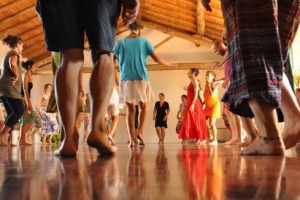
The sicilian Ballettu has some analogies with the southern tarantella wider family; it was performed most of all in a mixed and not mixed couple; many are the local variations, some of them even in the tied and much turned shape (pirullè), so that wide is its musical repertory. Searching the last traces of the traditional agropastoral sicilian tarantas, we find the “Ballettu”, a dance from the mountainous area near Messina, the Peloritani, endangered in its oldest form, but still…
Continua ⇒
Sara Favarò e la storia della canzone popolare “Vitti na crozza”

E’ la canzone siciliana della tradizione popolare per antonomasia, anche perché l’hanno interpretata, nell’era moderna, Vasco Rossi, Laura Pausini, Carmen Consoli, Franco Battiato, Gianna Nannini. Oggi una nuove luce viene gettata su “Vitti na crozza”, grazie a un’appassionata donna palermitana, Sara Favarò, cantante, studiosa, autrice di un libro. Il termine più criptico della canzone è “cannuni”, che, secondo una autorevole interpretazione, sarebbe la corruzione di “cantuni”, termine che, nel dialetto siciliano del centro Sicilia, è la porta, l’ingresso della zolfara. E…
Continua ⇒


