

The timpani: from the dionysian rituals, to the orchestra, up to the Flintstones’ theme
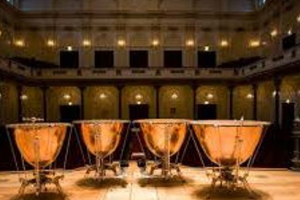
The timpanis are the musical instruments of the membranophone class, of the drums’ family. It is played through a direct percussion of the drum sticks whose extremities have a padding to soften the beat. It produces a determined sound, regulating the leather’s tension through mechanisms, nowadays actioned by pedals. The instrument is made by a copper or brass bucket (boiler), over which a membrane is lay out, once a leather one, now typically composed by a mylar sheet (a synthetic…
Continua ⇒
The Piemontese Courenta
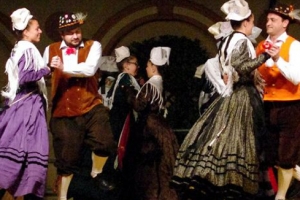
The Courenta (corenta in the normalized Occitan spelling, corrente in Italian) is a common dance in the occitan and french alpine wide valleys. Appeared in the XVI century the courenta develops in the XVII passing from Bransle Courant to two different dances: an italian version, the corrente (rather lively) and a french version, the courante (slowly dance). It was appreciated by King Luigi XIV, who declares it the dance of the ball opening dance, the french courenta disappears in XVIII…
Continua ⇒
The castagnette, neapolitan and calabrian traditional instrument
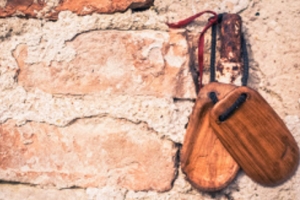
The castagnette are a percussion musical instrument used most of all in the mediterranean popular music, particularly in Campania and Calabria, often confused with the spanish castanets. Each castagnetta is made of two parts, in a shaped wood, tied by a piece of rope that allows the sound to come out opening and closing it with hands. Once closed, they assume the shape of a chestnut from which derives the name. They are used in pairs, even one for hand,…
Continua ⇒
The Irpinia Carnival tradition: the Zeza

The Irpinia Carnival Tradition: the Zeza An important place among the carnival activities is up to the Zeza, an ancient popular performance developed and internalized by the people from Irpinia with the title of Zeza Song, that is represented along the streets by solofrani and montoresi mexed groups. It’s a real popular theatre piece sung and accompanied by instruments like castanets, triccheballacche, tambourines, but also trombone, guitar and trumpet and often bass drum, that was probably born in the second…
Continua ⇒
The Italian Carnival: customs, traditions and dialect proverbs
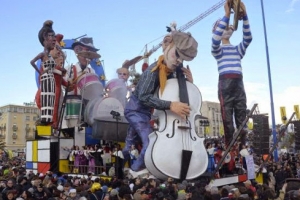
The Carnival is a Celebration of the catholic countries. The celebrations are often public parades in which rule playful and imaginary elements; particularly the distinctive element of the carnival is the costume use. The word carnival derives from the latin carnem levare (“eliminate the meat “), maybe conditiomned also by the latin vale (almost as “goodbye meat!”) because it indicated the banquet of the last carnival day (Fat Tuesday), right before the Lent’s abstinence and fasting period. I festeggiamenti maggiori avvengono…
Continua ⇒
Lirone, the double bass’ forefather
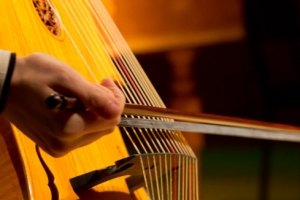
The leg’s lyre, lirone, perfect lirone or lyre’s arciviola is a played with a bow musical instrument common in Italy between 1500 and 1700, arm’s lyre relative, used mainly to accompany the voice; the instrument’s shape was similar to the viola with 12 strings and it used to lay on the ground. Sitting down and between the knees played, the lirone could have from 9 to 20 strings, increasing the range of possible tonalities (and therefore the repertoire) compared to…
Continua ⇒
Furlana (or friulana), the popular dance that was a big success among the courts

Many are the populare dances in Friuli, some of them very old. Generally the dances from Friuli used to represent aspects of the sentimental life: courting, the engagement, the marriage. So, during the summer the dance was outdoor, during winter the families meet in the stables. Up to the ’50s the popular dance was very common; the musical accompainment was made with accordion, lirion, flute and violin. The furlana (also forlana, frullana or friulana) is a very joyous dance of…
Continua ⇒
Eric Montbel with the seminary “Musette e Sordelline” at Maranola’s “The Zampogna” Festival

In the S. Maria ad Martyres Church sunday 17 from 16.00 to 17.00 will take place the Study seminary: “Musette, Sordelline and lost instruments” speech by Eric Montbel in Maranola’s The Zampogna Festival context. Nella Chiesa S. Maria ad Martyres Domenica 17 dalle 16.00 alle 17.00 si terrà il Seminario di Studi: “Musette, Sordelline e strumenti perduti” a cura di Eric Montbel nel contesto del Festival “La Zampogna” di Maranola. Eric Montbel è un ricercatore, musicista, fondatore del gruppo Le Grand Rouge, Lo…
Continua ⇒


