

Movies dedicated to the workers

Movies dedicated to the workers Il cinema da sempre ha provato a portare alla luce alcuni aspetti del mondo del lavoro, ed il risultato è stato davvero grandioso per alcune pellicole che sono diventate dei capolavori. Parliamo di Tempi Moderni di Charlie Chaplin (1936), sul tema dell’alienazione della catena produttiva nella società del profitto Altro film per la festa dei lavoratori è Ladri di biciclette di Vittorio De Sica (1948), la cui trama racconta la storia di un uomo a cui viene rubata la…
Continua ⇒
The Resistance in the movies
Il filone filmografico dedicato alla Resistenza comprende moltissimi titoli di registi italiani che hanno trattato nelle loro pellicole questo tema, che tocca ancora da vicino le coscienze. Il filone narrativo ed estetico neorealista ha preferito una sincera e riuscita messinscena del dramma (Roma città aperta di Roberto Rossellini, 1945); il fronte analitico ha tentato di sottoporre al pubblico questioni morali. Il dibattito critico sorto nel periodo successivo alla fine della Guerra di Liberazione ha visto contrapporsi gli autori che tentavano…
Continua ⇒
The Calabrian Tarantella
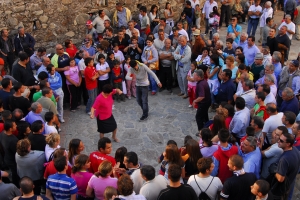
The calabrian tarantella or tirantella (rarely taranteja, formerly called u sonu) is a generic word that includes the different musical expressions spreaqd in the calabrian peninsula, with features that make it noticeable among the others of the Southern Italy, esepcially in the rythm. It assumes the rule of a dance for the festives occasions or religious- processional ones. The differences for areas are several: from the free one of Catanzaro area to the sonu a ballu of the Aspromonte and from…
Continua ⇒
Panni’s zampogna

Panni’s zampogna In the italian zampogna world a exeptional case is the one of the only known zampogna from Apulia: that of Panni, a village in Foggia’s province. This instrument, defined anomalous by the experts, is different because it has the wineskin made by lamb skin and for others technical characteristics. It’s interesting the fact that it hasn’t standad measures; the players are also the instrument’s producers, so that each one is unique, as inimitable is its timbre. The tuning…
Continua ⇒
“The connections between the popular music and the singer-songwriters’ songs” by Elvio Rocchi
We are going to propose an interesting article by Elvio Rocchi, our musician active in Colombia, dedicated to our music, that explains some basic concepts, as the relation among pizzica and tarantella and the tarantula’s bite and that tells the Jewish origin of “Alla fiera dell’est”. Elvio made a concert last week in Bogotà named “Musica Popolare Italiana” dedicated to our tradition’s music, a kind of trip beginning from the traditional songs and ending to the author music, with Fabrizio De…
Continua ⇒
It comes out Micamicapisci, the video that names Misga’s tour
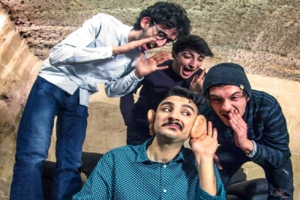
MISGA, the band from Andria, are just come back from the european tour, realized by Freecom with Puglia Sound’s support: after playing in France, Belgium and Germany, they come out with MICAMICAPISCI, the video of the song that named the tour. The video idea was born by the necessity to place side by side an apparentely nonsense text to a story thatm in a sharp and ironic way, relates the inconveniences of an emerging band forced into a system that, only…
Continua ⇒
The sicilian Fasola, the carnival and harvest’s dance

The sicilian Fasola, the carnival and harvest’s dance The Fasola is a sicilian tradizional dance. The Tubbiana’s Fasola during the carnival period is the most common dance and at the same time the most cheerful and charming in Sicily, as to say a tarantella accompanied with the song “Carnascialata dei Pulcinelli”. While women used to dance the fasola, men accompany them with the singing. It’s a very old dance, danced in the courtyards and used during carnival. A variation was the Fasola, danced in…
Continua ⇒
Giulio Cantore, liuthier and member of Almadira, introduces us to his art
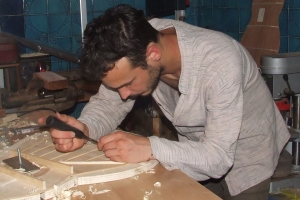
The 14 March cames out the first Giulio Cantore and Almadira’s album “Talea”. Giulio Cantore is a singer-songwriter, guitarist and liuthier. From 2006 to 2008 he attends the Centopievese Strings Instruments School and learns to shape the wood, to build strings instruments. In the interview realized for Italian Popular Music by Agnese Ermacora (trio’s press office), Giulio describes us his builder’s work. –Come nasce una chitarra? “Quando decidi di fare uno strumento, devi sapere precisamente cosa vuoi ottenere. Devi immaginare il suono,…
Continua ⇒


